Showing posts with label reviews. Show all posts

Thursday, August 28, 2014

The Emperor's Blades by Brian Staveley


The Emperor's Blades by Brian Staveley
Book 1 of Chronicles of the Unhewn Throne
Blurb:
The emperor of Annur is dead, slain by enemies unknown. His daughter and two sons, scattered across the world, do what they must to stay alive and unmask the assassins. But each of them also has a life-path on which their father set them, destinies entangled with both ancient enemies and inscrutable gods.

Kaden, the heir to the Unhewn Throne, has spent eight years sequestered in a remote mountain monastery, learning the enigmatic discipline of monks devoted to the Blank God. Their rituals hold the key to an ancient power he must master before it's too late.

An ocean away, Valyn endures the brutal training of the Kettral, elite soldiers who fly into battle on gigantic black hawks. But before he can set out to save Kaden, Valyn must survive one horrific final test.

At the heart of the empire, Minister Adare, elevated to her station by one of the emperor's final acts, is determined to prove herself to her people. But Adare also believes she knows who murdered her father, and she will stop at nothing—and risk everything—to see that justice is meted out.


Review:
It's hard to escape the "dark" descriptor on currently published books.  While optimism can be seen glimmering here and there, it seems pragmatism and doubt are more common.  The same cultural cynicism driving the surge of young adult dystopian novels contributes to the rising pervasiveness of Grimdark fantasy on adult shelves.  Obviously adults read YA, too, and experience the same rebellious thrill of fighting a corrupt system, but Grimdark reveals a harder (though no less applicable) truth:  the system is cruel and corrupt because its people are cruel and corrupt.  The system did not come from nothing.  In this harsh setting, a character is never happier than when using that system to exploit or demean others. 
  
Some people might consider labels an oversimplification, but I'm just lazy enough that I like the convenience.  Therefore I'm going to call this "Grimdark" and roll with it.  As this has been christened a Grimdark story, here are some truths about it:

1. Everyone will be horrible to someone .  Or someone will be horrible to them.  Constantly.
2. If someone dies, it will be in a horrible way.  Nobody dies in their sleep here.
3. If someone becomes happy, it's because something horrible is about to happen that will create stark contrast between the "before" and "after."
4. Nature is horrible and full of monsters.

Grimdark in a nutshell.
And that brings us to the wonderful world of The Emperor’s Blades.  Honestly, despite my cold reptilian heart and general misanthropy, I do not tend to seek out Grimdark books.  I might be cynical, but I’m not secretly wishing more despair on myself.  I like my sci-fi spacey, my historical fiction fully of Giant Quote Marks “History” and my fantasy heroic.  I don’t need to watch a Grimdark world pound out every soft fiber of humanity from the characters to empathize with them.
This might be why I found myself rather amazed that I liked this book. Honestly, I was about halfway through before I realized that I was reading a book that some might classify as dark fantasy.  Partly, I attribute this to the characters.  

There are allegedly three main characters (one of which is female – 10 points to the author), but just two of them get 90% of the screen time (and both of them are men, so I’m taking back 3 points).   Each brother is entangled in their own particular mess of problems (in a suitably Grimdarky way), and no matter how bad things seem, they're always about to get worse.  Somehow this comes off less as "life is dark, man, dark" and more "dangerous times ahead" which is more tolerable.  People get murdered, scary monsters stalk the night, more people get murdered, people get beaten up, mysterious people have ulterior motives, and finally even more people get murdered.  Oh, and there are gigantic people-carrying hawks.  It's practically a fairy tale!

One bright spot - if you want to call it that - is that when the female protagonist appears in one of her four POV chapters, she totally rocks the house.  This is one woman who can give as good as she gets and isn't about to let some stupid a-hole ruin her family.  I love her and I hope that the subsequent volumes have more of Adare in it.  (Oh yeah, this is the first book of a series.  Because the Cardinal Rule of Fantasy is "Thou shalt always write a series.")

So I've been a little nitpicky on the dark-front, but this book was entertaining - if you can look past the tone of despair and malice.  I'm honestly surprised this is Staveley's first book for how well I liked the characters and for how well the world held together through the plot arc.  If you don't mind dark fantasy, or you don't mind starting yet another series, this is a worthy book to read.

4 dark and malicious stars!

Will I continue to read the series?
Probably, if I remember to look for the next volume.  (This is why I should never start a series until at least the next book is announced.)


Monday, August 18, 2014

The Girl With All the Gifts by M. R. Carey


Girl With All The Gifts

Blurb:
Every morning, Melanie waits in her cell to be collected for class.

When they come for her, Sergeant Parks keeps his gun pointing at her while two of his people strap her into the wheelchair. She thinks they don't like her. She jokes that she won't bite. But they don't laugh.

Melanie is a very special girl.


Review:
Zombie stories, we need to talk.  It's not you; it's me.  This isn't working out.  We've had some good times, and you're going to make someone else very happy.  It's just not going to be me.  I wish you all the best in your future endeavors.  

At first I thought this was going to be a more dystopian book, or something with a surprise twist in it.  But once it was revealed that the world "ended" in a zombie-pocalypse, I knew things were going to be rough going.  Now, that being said, it isn't fair to judge a book poorly just because it didn't match my preconceived notions.  

So let's get into the things that I liked:
1. The characters.  Carey does a fantastic job of creating characters with their own goals and fears and forcing them to stick to character.  The nearly-sociopathic doctor doesn't suddenly grow a conscience, nor does the hardened soldier spout sonnets.  Once you've figured out the characters, there are no mysteries.  They all behave they way they should according to their current wants, their past mistakes and their backgrounds.  It might sound like damning with faint praise, but it's hard to find a book where the characters are so consistent and logically written.

2. The mood.  There is almost always a vague unease around every new location.  There is almost always a fight simmering below the surface between parts of the cast.  The hungries (zombies) are everywhere, always waiting for their next meal.  The atmosphere is bleak, the characters are barely clinging to hope and pretty much everything else is consistent with the end of the world.

3. The ending.  I'm not going to spoil it because I'm not 100% a jerk, but basically I did not expect the ending to be as true-to-form as the rest of the book.  To write the ending that he did requires some brass balls and kudos to Carey for doing it.

However, this was a zombie book at heart and no matter how well-written, I have troubled investing myself into a zombie book, which is somewhat ridiculous because I'll happily read about talking animals or space battles or dragons.  Hell, I love the Oz books.  There's something about zombie tales, along with steampunk, that just falls flat for me.  

Trying to extract my "ugh, a zombie book" attitude out of this one, I'd still say this book is very well-written and a fun Fallout-style post-apocalypse adventure that most people would like.

And hey!  It's not a new series!  Yay!

4 stars! (Unless you also don't like zombie books, in which case, probably read something else.)


Friday, August 15, 2014

Dorothy Must Die by Danielle Page


Dorothy Must Die by Danielle Paige
Blurb:
I didn't ask for any of this. I didn't ask to be some kind of hero.

But when your whole life gets swept up by a tornado—taking you with it—you have no choice but to go along, you know?

Sure, I've read the books. I've seen the movies. I know the song about the rainbow and the happy little blue birds. But I never expected Oz to look like this. To be a place where Good Witches can't be trusted, Wicked Witches may just be the good guys, and winged monkeys can be executed for acts of rebellion. There's still the yellow brick road, though—but even that's crumbling.

What happened? Dorothy.

They say she found a way to come back to Oz. They say she seized power and the power went to her head. And now no one is safe.

My name is Amy Gumm—and I'm the other girl from Kansas.

I've been recruited by the Revolutionary Order of the Wicked.

I've been trained to fight.

And I have a mission.


Review:
First of all, I must confess that I have an abiding affection for the Oz books which started in late grade school when I discovered the set at my local library. The books are full of wonder and friendship, mixed with just the right amount of peril and the absurd.

When I saw an Oz-inspired YA book, I had to get it (thanks again, public library!). This book delivers exactly what it claims to: a dark, twisted reimagining of the Oz story, in which some of the beloved characters have been twisted into evil monstrosities and the carefree magic of the realm has been drained, leaving the country a shadow of what it was. Throughout the story, there are even cameos (and minor roles) for many of the characters who were written into the original series. It's abundantly clear that the author has read - and loved - the original series as much as anyone can.

The main character is about as typical YA fantasy heroine as you can get: teenaged girl with family and self-image issues learns that she is stronger than she knows. And hey, she has pink hair - at least for part of the book. Neat.

Here's my main gripe about this book: the entire narrative is designed to set up the series, but nothing is resolved within this book. Okay, maybe the protagonist learns "to believe in herself." Woo-hoo.

I guess this can be boiled down to a marketing decision. On the back cover of the book is what look to be the plot of this story: "Your mission: Remove the Tin Woodman's heart. Steal the Scarecrow's brain. Take the Lion's courage. And then - Dorothy must die."

Punchy, right? This book is going to be all rock 'em, sock 'em, let's-save-Oz.

But no.

(SEMI-SPOILER)

That bit of promise on the back cover is what is discovered in the FINAL FOUR PAGES. The entire book leads up to a conclusion - post large as life on the BACK COVER - so close to the end of the book that it's practically on the end papers.

(END SEMI-SPOILERS)

Overall, the book was fun. I love an excuse to return to Oz and experience the magic again, even if it's in a grimdark setting. I'm a little disappointed in the non-resolution of the plot and the Setting Up a Series Syndrome, but all in all this is a book well worth the read.

Will I continue reading the series?
Yeah, maybe. Depends how long between books and whether or not I'd just rather read the original series.


3.5 Stars!

Monday, July 28, 2014

The Mote in God's Eye by Larry Niven and Jerry Pournelle

The Mote in God's Eye
Larry Niven and Jerry Pournelle

Blurb (courtesy of Amazon Reviews):
In the year 3016, the Second Empire of Man spans hundreds of star systems, thanks to the faster-than-light Alderson Drive. No other intelligent beings have ever been encountered, not until a light sail probe enters a human system carrying a dead alien. The probe is traced to the Mote, an isolated star in a thick dust cloud, and an expedition is dispatched. In the Mote the humans find an ancient civilization--at least one million years old--that has always been bottled up in their cloistered solar system for lack of a star drive. The Moties are welcoming and kind, yet rather evasive about certain aspects of their society. It seems the Moties have a dark problem, one they've been unable to solve in over a million years.

Review:
As part of my science fiction binge, I picked up The Mote in God's Eye as a frequent entry on "Best of Science Fiction" lists, knowing nothing more about it.  The blurb on the back of my edition makes it clear that this is a book about first contact, and that's the extent of the explanation.

Let's sum up:  humanity encounters another race that is unlike us both psychologically and physically - and yet there is a hope that we can learn from each other and live in peace.  As the story unfolds, the simple and gently charismatic "moties" reveal a darker side to their existence - which I can't really get into without giving away a big part of the story - and the initial thrill of deep space exploration and First Contact is overwhelmed by dread and fear.  A few scenes had my jaw on the floor while simultaneously shivering under my blanket from the delicious mix of "creepy" and "unforeseen."

This book has truly earned its place on the "Best Science Fiction" lists, and yet the ending leaves only questions.  Nothing is truly resolved and the authors leave it up to the reader to decide what the fate of these two species might be.  At least, that's what I thought until I realized this book is the first part of a trilogy.  Granted, it took the pair something like twenty years to finish the second and third books, but still.  Another frickin' series.  Great.

The plot is what drives this story.  There are a least a dozen named human characters (besides the moties themselves) and yet I don't think I could give a decent description of any of them, other than "token female" and "space captain."  However, that's probably okay, because this book is all about the questions it raises.  Knowing that humans are essentially animals - animals that must compete for survival or die - can we ever find a way to coexist with another sentient species whose very existence and competition might mean an end to ours?

This is not a warm-fuzzy book, nor is it really a shoot-em-up space opera.  It's a "thinking" book, in the sense that when you close it, you have to really think about it, to digest it, to absorb it.  I'm honestly not sure if I'll be continuing with the series because I don't know how the resolution of the raised questions could be better than the asking.

4+ stars!

Friday, July 18, 2014

Review: Grimspace by Ann Aguirre


Grimspace by Ann Aguirre
Book 1 of Sirantha Jax
Blurb:
As the carrier of a rare gene, Sirantha Jax has the ability to jump ships through grimspace-a talent which makes her a highly prized navigator for the Corp. Then a crash landing kills everyone on board, leaving Jax in a jail cell with no memory of the crash. But her fun's not over. A group of rogue fighters frees her...for a price: her help in overthrowing the established order.

Review:
Perhaps I'm sexist, but it feels like the sci-fi books I've read written by women are just better (for me) than those written by men.  Perhaps (and far more likely) my sample size has just been too small.  Whatever it might be, Ann Aguirre's Grimspace was far more enjoyable to me than the previous two books I've read.

The story starts with a prison break and jumps madly from one misadventure to another, never dwelling long on any one situation.  Though each scene has its own tension and excitement, there doesn't seem to be a logical arc to the story, tying the conflicts together.  There is lip-service paid to fulfilling the dream of a (deceased) character, but for the most part it's a lot of Sirantha Jax coming to terms with her past and making googly eyes and/or snarky comments at her copilot.

If you're looking for a drool-worthy ship, this probably isn't the book for you.  From the very first scene where March appears, there is no doubt that he and Jax will end up in the sack.  It's not even subtle enough to be a "definitely, but when" sort of thing, but rather a "before the first half of the book" sort of thing.  Protip:  when you have a heroine with emotional vulnerability, it's almost a given that the first guy who merits more than one sentence of description will be the one she becomes romantically entangled with at some point.  It's far more common in romance novels than others, but it's certainly true here. 

As for plot - this book reads like the novelization of a video game in the best possible way.  There is an initial "goal" suggested at the beginning of the book, but that pretty much flies straight out the window as soon as there are kidnappings and alien attacks and stuff like that.  The PC (in this case, Jax) keeps picking up party members, solving mini-quests for NPCs, and gaining experience points.  The overall story arc never really resolves the initial "goal" and that ends up not mattering.  Despite all of this aimlessnes, it's pretty solid.  I never really knew where the story was heading, but it was so fun it's hard to care.

Will I continue reading the series? 
Yep.

4 stars!


Tuesday, July 1, 2014

Review: The Paradox Trilogy by Rachel Bach


Series:  Paradox by Rachel Bach
  1. Fortune's Pawn
  2. Honor's Knight
  3. Heaven's Queen
Hey guys.  Ever have that one relationship that transcends your understanding of love?  The one that makes you realize that everyone you've met in the past was just a test run for this real thing?  That relationship that, once it ends, makes you realize you'll never find anything like it again - and are therefore slightly hollow for the rest of your life?

Yeah, me neither.

I have, however, read the Paradox trilogy by Rachel Bach, and that's almost as good.

This is the series of books that made me realize that I could, in fact, be interested in Science Fiction.  Before this series, I had only read a couple of the classics (most notably Dune), and while I enjoyed them, I wasn't inspired to love the genre as a whole.  This is the series of books that changed it all.

Why?  I don't have any definitive answer, but I suspect I have a few reasons.  

1. Deviana Morris herself
I love reading books with strong female characters.  They don't have to be sword- or gun-wielding, but being more than a damsel-in-distress is pretty great.  And Devi is the type of woman who names her guns (and her super-powered space armor).  She goes for what she wants without any apology - without being a complete asshole about it.  She's not afraid to pick a fight if that's what's necessary, and she knows that what's right isn't always easy - but worth fighting for all the same.  She has a healthy approach to sex and relationships...even if those relationships can cause problems in the future.  While she appreciates a fine masculine physique, she doesn't become a puddle of googly eyes and insipidity the second her man-love walks into the room - and gets incredibly pissed if he screws her over. You know, like a real person.  I want to hug her, but I suspect that she might punch me if I tried.

2, Adventures in SPAAAAAACE


Oh, man.  There is so much going on here.  Alien races.  Mysterious deaths.  "Invisible" monsters.  A secret society.  Twisted "magic".  Saving the universe. "Fencing, fighting, torture, revenge, giants, monsters, chases, escapes, true love, miracles!"  (Okay, that last bit is a quote from The Princess Bride but you know what I mean.)  There are a few calm moments throughout the series, but for the most part this is a driving narrative that Deviana drives through to the end.  Each book expands on something introduced in the previous volume, giving the setting depth and dimension, making it feel like a real place.

3. Mystery/Quest

Fortune's Pawn starts out with our dauntless heroine taking a job that is deceptively dangerous.  While everyone knows that the ship - and whatever its mission is - leaves a trail of dead bodies behind it, it's not clear why.  By the time the real reason for the wake of corpses is revealed, the stakes have been raised so high it's hard not to inhale the next chapter...and the next...and the next, right up until the series is over and you're left feeling spent and satiated.

This isn't to say that the series doesn't have problems:  Devi gets into and out of scrapes faster than any twelve normal people and rarely has anything to show for it other than a few bruises.  Also, the entire ending of the series gets wrapped up a little to neatly for my taste - including a cameo by a Super Important Person that borders on deus ex machina.  It's a bit more of a fairy tale ending rather than a super space epic war-for-all-life type of ending, but I suspect that most people don't mind a happy ending.

To sum up:
Read this series.  Read it right now.


Wednesday, June 18, 2014

Review: Caliban's War by James S. A. Corey

Caliban's War
Book 2 of The Expanse

We are not alone.

On Ganymede, breadbasket of the outer planets, a Martian marine watches as her platoon is slaughtered by a monstrous supersoldier. On Earth, a high-level politician struggles to prevent interplanetary war from reigniting. And on Venus, an alien protomolecule has overrun the planet, wreaking massive, mysterious changes and threatening to spread out into the solar system.

In the vast wilderness of space, James Holden and the crew of the Rocinante have been keeping the peace for the Outer Planets Alliance. When they agree to help a scientist search war-torn Ganymede for a missing child, the future of humanity rests on whether a single ship can prevent an alien invasion that may have already begun . . .


Review:
Alright, I gave the first book the benefit of the doubt, mostly because the intriguing-yet-not-thrilling plot picked up to a frenetically awesome pace toward the end of the book, setting the stage for Caliban's War to have a thrill-a-minute adventures.  (SPOILERS from book one) After all, when an alien-created protomolecule is absorbing humans and their characteristics, and then making inanimate object sentient, surely the next book is going to be amazing, right?  No?  You know...how human will realize we're not alone....and there will be adventures...No?  We're not going to have a "first contact" story?  We're going to have backroom politics instead?  And lovers' spats?  Really?  Okaaay.  If you insist...

Once again, the authors (yes, "authors" - the pen name is for two people) alternate perspectives by chapter.  Only one narrator has returned from the first book:  Holden, the naive yet good-hearted captain. Our now-cranky-instead-of-hopeful captain is joined by three others:  a scientist looking for his kidnapped daughter, a marine who saw her entire platoon get killed, and a feisty and foulmouthed grandmotherly politician.  While I give props to Corey for having female protagonists this time , I can't say that any particular POV was engaging.  None of the characters truly had their own voice - except for maybe Avasarala, who swears almost every sentence she utters.  Prax, Bobbie, and Holden all have the same voice which is about as interesting as plain oatmeal.

Once again, there is the same problem with the prose being dull.  Normally I am not one to notice writing unless it's really bad.  However, this isn't bad writing, it's just bland writing.  There is no life in it, and unfortunately the characters add nothing, so once again absurd action sequences are shoe-horned into the story to, ahem, "keep the tension up."  I don't need to dredge up the "If Michael Bay directed Titanic" gif again, do I?

Just as with the first book, the narrative slowly reveals the actual drama and who is behind it, but by that point of the final reveal I was so uninterested that I just want to speed read clear to the end.  I mean, for the love of corn, the very first sentence on the blurb is "We are not alone" - so why does it take until the FINAL page - yes! the last page of a 624 page book - for any indication that the alien protomolecule is genuinely doing something?  There are a few passing mentions of its activity, but mostly the alien thingamajig is shunted aside for Avasarala to swear at someone or for Holden to moon over his girlfriend.  Blergh.

As I've said before, there are very few books over 350 pages that couldn't benefit from some severe editing.  Knowing I could have read almost two other paperbacks for the same amount of pages hurts my soul a little.  The fact that this book flares into Super Awesome Space Adventure in the last 20-30 pages doesn't really make up for having to read over 500 pages first.  The story ends on a massive cliffhanger and while I want to know what's going to happen next, I'm leaning toward "I'm not falling for that again."

3 stars!

Will I continue reading the series?   
Eh.  *avoids eye contact*


Thursday, June 5, 2014

Review: Leviathan Wakes


Leviathan Wakes by James S. A. Corey
Book 1 of The Expanse


Humanity has colonized the solar system - Mars, the Moon, the Asteroid Belt and beyond - but the stars are still out of our reach.
Jim Holden is XO of an ice miner making runs from the rings of Saturn to the mining stations of the Belt. When he and his crew stumble upon a derelict ship, "The Scopuli," they find themselves in possession of a secret they never wanted. A secret that someone is willing to kill for - and kill on a scale unfathomable to Jim and his crew. War is brewing in the system unless he can find out who left the ship and why.
Detective Miller is looking for a girl. One girl in a system of billions, but her parents have money and money talks. When the trail leads him to "The Scopuli" and rebel sympathizer Holden, he realizes that this girl may be the key to everything.
Holden and Miller must thread the needle between the Earth government, the Outer Planet revolutionaries, and secretive corporations - and the odds are against them. But out in the Belt, the rules are different, and one small ship can change the fate of the universe.


Review:
Ah, the quest for another satisfying science fiction epic carries on...
If you're looking through current Sci-Fi publications, you're sure to stumble across James S. A. Corey's "The Expanse" series.  So far it seems well-received, and with three books of the series already released, it can be a good bet to place your chips on.

The story itself easily falls into the "space opera" category, with many adventures in the greater reaches of space - but only our solar system.  While that in itself is, of course, a miracle by modern standards, I suppose I'm used to science fiction having a bit farther of a reach.  Even though space is incomprehensibly big, limiting the story to just our solar system gives it a deceptively small sensation, like having tea in a closet next to a ballroom.  I dunno.

The plot of the book, once it becomes apparent, hinges on the strained inter-human politics of the solar system.  Earth and her colonies have a mutual mistrust.  Even the colonies themselves aren't exactly simpatico.  Mars feels a certain camaraderie with the Belters - but only as long as the Belters are supplying them with the minerals they need.  Not only are the politics of each group different, but spending lifetimes in low gravity is starting to change the physiology of Belters, making the two groups stand out from each other even more than their differing politics would indicate.


The real driving force is the underlying mystery of "who is trying to orchestrate a solar system-wide war?"  No one seems to gain from the chaos and everyone seems to lose, yet everyone is eager for war.  However, the horrors of war are a pale shadow of what is truly happening, which is only revealed in small chunks as the story progresses.  Miller is seeking a lost daughter of a rich magnate, while Holden is hell-bent on revenge for whoever was responsible for killing his crew and blowing up his ship.  The plot is interesting:  who is responsible for starting this war?  What happened to Miller's target?

Unfortunately, where the narrative loses most of its momentum is with the two main characters.  Holden and Miller alternate chapters, taking the reader at their sides as their uncover darker mysteries than seem possible.  But it's the mysteries that are interesting, not the characters.  Miller is a disgraced detective who's trying to prove that he's not washed up.  Holden is a sometimes-angry, sometimes-chivalrous former navy officer out for revenge - and sweet lovin' with the only woman around.  Sure.

Here's the thing:  "James S. A. Corey" is actually the pen name of two authors.   Each author took on POV character and wrote the chapters.  This isn't a terrible idea, really.  However, the chapters are written in third person, not in first, so the "voice" of the narrator has to be more generic 3p-Limited, a camera following the characters and reporting.  No two people write the same way, so the style they settled on is so bland that only the Michael Bay-esque action sequences keep the story lively.
"Things might be getting boring..!"    "Add an explosion!"


I'm generally not a stickler for "Show, don't tell," but even I started to notice things in this book.  We are told how the characters feel.  We are told that they are honorable (or angry).  We are told how they're changing.  (I can't decide what's worse:  that the reader is told that "this is a character arc btw", or that they reader can't tell that with the prose alone.)  When I think "Oh, he's being honest?  That's what that conversation is supposed to mean?  Really?" or "He changed?  When did that happen?  Was I supposed to notice that," it's hard to take it as a good sign.

Given that the solar system is half female, it's also a disappointment to see so few meaningful female characters.  Essentially there are two:  Julie, the missing woman that Miller was told to find (aka "The Damsel in Distress") and Naomi, one of Holden's crew (aka "The 'Love' Interest").  Hardly anything legendary here.  More than once, I wished Devi Morris would show up and start shooting first, asking questions later.

On the cover of my edition, George R R Martin has a quote, "It's been a long time since we've had a kickass space opera..."  Now, one of the co-authors is his assistant, and while I'm not going to accuse anyone of nepotism, I would just like to point out that he isn't exactly saying that this is the next great "kickass space opera."  (Funnily, on later editions, the quote is pared down to simply "...kickass space opera..."  So yeah.  I"ll just leave that there.)

I know I'm sounding a little down on the book, but despite the watered-down narrator and intangible characters, I liked the story.  Liked it - didn't love it.  The final few chapters have enough genuine excitement and creepfest plot development to make a reader want the next book.  However, I would have enjoyed this book more had it lost about a third of its length and gained about more interesting - and possibly female - protagonists.

3 Stars!
Will I read the sequel?  Yep, doing it right now. 
More explosions!  Quick!

Sunday, June 1, 2014

Review: Under the Never Sky (Trilogy)


 Under the Never Sky trilogy by Veronica Rossi
1. Under the Never Sky
2. Through the Ever Night
3. Into the Still Blue

Review:
I started reading this series a couple months ago and thought I should write a review of the first book, but then I was reading the second one, "so maybe I should just write both reviews together" and then I was getting the third one from the library, so now I'm doing to ultra-lazy thing and writing all a review for the trilogy as a whole.

So, yeah.  This is a series of books.  I read them.

Perhaps it's a matter of going in with overinflated expectations, but the first book was  underwhelming to me.  Not that it was bad, mind, just not thrilling.  The little bits of technology and the world that Rossi invented is interesting:  Pod Dwellers have "Smart Eyes" (think super-futuristic Google glasses) and the tribes have individuals who have developed super senses.  It's a neat little setup, but most of it comes off as window dressing by the end of the story.  Interesting window dressing, but window dressing all the same.

Unless you didn't read any of the blurbs on the books, it's obvious from the get-go that this is going to be a YA romance in a sci-fi setting, and that's okay.  However - and perhaps this is my cold, reptilian heart speaking - the romance was nothing to swoon over.  There will never be a reader who isn't certain that Perry and Aria are going to get together.  But nevertheless, we have to dedicate the first book to "will they or won't they" and the entire second book to "the travails of a difficult romance" as if the audience should care more about a couple because they have to fight for their love.  It's not that the romance is unbelievable, it's just that it's not really enough to be the only motivating force in the narrative.

By the time the third volume finally arrived at my local library, I had forgotten enough of the first two books to make me less keen to finish.  However, I was just curious enough to see how the whole shebang ended to read through it.  As expected, the googly eyes and canoodling still are present throughout the final book.  This probably wouldn't bother me so very much except all the frickin' characters are so dang melodramatic about their lovelives.  One guy has lost the love of his life (at eighteen or nineteen) and pretty much becomes a walking a$$hole for the first chunk of the book, leading to some stupidities that could have been avoided.  The main pair are brought together and torn apart so many times - and yet they always have the energy to settle into a mope.  When a secondary character actually scolds the heroine for "Bella'ing" (my term, not the author's), I had to wonder if this wasn't some kind of a joke.

"But wait," you ask.  "If you didn't love them, why did you bother to read the entire series?"  An excellent question, young grasshopper.
I guess the storyline and the setting are just interesting enough that a reader will want to know the ending, even if they aren't thrilled with the books on the whole.
If you're wondering: the ending doesn't exactly blast open any new inroads into any genre, but it's satisfying enough for this series.

I suppose I was just interested enough that I hoped the books would get better.  Even though they never really take off, at no point did I feel like the story was floundering.  So there's that.  It's not terrible; it's not the best thing ever written.

3 stars across the board!

Thursday, May 29, 2014

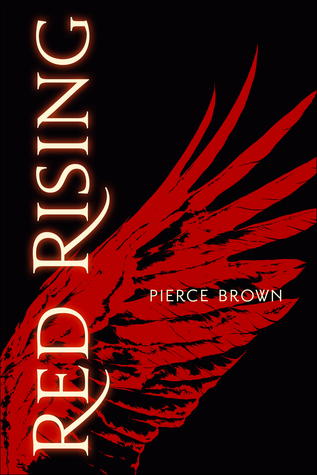
Review: Red Rising


15839976
Red Rising by Pierce Brown
Book one of the Red Rising Trilogy
Release Date: Jan 2014

Hello kids!
Let's get into the writing kitchen and write a Pretty Decent Book!
 Here's the recipe (as far as I can tell) for Red Rising:

Begin with a base of two parts City of Ember and one part the first chapter of The Hunger Games.
Let setting be "on Mars" for flavor, liberally using air quotes.
Include totally-see-it-coming injustice.  Toss well.
In a separate scene/bowl, shake a little of Uglies with the "makeover" parts from Hunger Games/Catching Fire.  
 Once mixture has reached desired tension, add the following:
  • Greek mythology references from Percy Jackson series
  • Attribute-based housing from Harry Potter and Percy Jackson
  • Brutal, allegedly supervised arena fights from Hunger Games/Catching Fire/Battle Royale
  • Complete batshit insanity, violence and social decay from Lord of the Flies
  • Downtrodden underdog becoming unlikely lord of death with his small-yet-feisty band from Dune - and pretty much every "hero's journey" story ever
Allow mixture to heat until it boils over.  And makes a very exciting mess.

For all the books that are rolled into this one, there should be something for almost every reader.  It's not a revolutionary new tale, but neither was The Hunger Games (purists will defend Battle Royale to the end, I guess), and that series did well enough for itself. There is enough drama and violence to sate almost any appetite, and enough power plays, survival dramas and political machinations to engage the mind.  Both young adult and adult audiences should find something in these pages.

I certainly enjoyed the book.  While I finished it a few weeks ago and have already forgotten the hero's name, the excitement of the story is still sticking with me.

Will I read the sequel?  Yeah, probably...when it's released.  Next year.  In fact, if you want to read this book, I might wait a bit so you don't have to do the Recollection Re-read.

4 stars for the engaging nature of the story.  3 stars if you're looking for a more original novel.

Monday, May 19, 2014

The Lost Fleet: Dauntless by Jack Campbell


The Lost Fleet: Dauntless by Jack Campbell
Book 1 of The Lost Fleet

The Alliance has been fighting the Syndic for a century-and losing badly. Now its fleet is crippled and stranded in enemy territory. Their only hope is Captain John "Black Jack" Geary-a man who's emerged from a century-long hibernation to find he has been heroically idealized beyond belief. Now, he must live up to his own legend.

Review:
Just as Fantasy has many subgenres (high, epic, dark, urban, historical, etc), so does Science Fiction have its subgenres: speculative, dystopian/post-apocalyptic, space opera, alternate history, to name a few.  One of the currently popular genres is "military science fiction" - which I sincerely hope needs no explanation.

The blurb on the back of the book is about as much setup as you need for this story.  A soldier has awakened from a century of cryogenic sleep to find the war that he almost died in is still raging on, that his fleet is in danger, and that he might be the only one that can rescue the Alliance fleet from a dilemma of their own making.  Bam.  Action.

Campbell doesn't pull any punches with getting the action started.  In fact, the whole book reminded me (favorably) of the early episodes of Battlestar: Galactica, in which thousands of lives are at stake and there is no time for careful contemplation.  Geary makes a decent protagonist, if not exactly a ground-breaking one (another white male soldier/space marine, anyone?), and his core decency gives the book a moral core, while his impatience and frustration with the decayed discipline among his fellows gives the book some emotional drive.

One thing that science fiction has traditionally excelled in is being rather egalatarian about gender and race issues, from Uhura on Star Trek to Lady Jessica in the Dune series.  While Campbell plays it safe with the race and gender or his protagonist, he isn't hidebound into forcing an all-white, all-male cast.  Two characters Geary brushes against regularly are female: a ship's captain and a civilian co-president.  The fact that the author was willing to place two women in places of authority - authority "Black Jack" Geary never questions - was good enough that I won't be too disappointed that the rest of the cast seems to have a Y chromosome.  Better than nothing.

The plot of the book reads like the pilot episode of a new smash-bang sci-fi roller coaster, with death and danger around every corner, followed by political machinations and power plays in rapid succession.  Adventure!  Schemes!  Heroes/heroines!  Sacrifice!  Excitement!

And since this feels like a pilot episode, absolutely nothing is resolved - not that it should be.  The initial encounter is teed up and the whole dramatic arc is plotted in front of you:  Will Geary be able to get the fleet home?  How many will survive?  What other adventures wait for our fleet before the end?

Not exactly the deepest book every written, but not disappointing, either.  If you're looking for a by-the-numbers military fantasy, then this is a solid book to pick up.  At 293 pages, it won't be a heavy read by any definition of the phrase.
 
3.5 stars!
Will I read the sequels?
Oh, yes.  Mm-hmm.  Yep.
PEW PEW PEW!

Wednesday, April 2, 2014

Book Review: Song of Scarabaeus


Song of Scarabaeus  by Sara Creasy
Book 1 of "Scarabaeus"

Trained since childhood in advanced biocyph seed technology by the all-powerful Crib empire, Edie's mission is to terraform alien worlds while her masters bleed the outlawed Fringe populations dry. When renegade mercenaries kidnap Edie, she's not entirely sure it's a bad thing . . . until they leash her to a bodyguard, Finn—a former freedom fighter-turned-slave, beaten down but never broken. If Edie strays from Finn's side, he dies. If she doesn't cooperate, the pirates will kill them both.

But Edie's abilities far surpass anything her enemies imagine. And now, with Finn as her only ally as the merciless Crib closes in, she'll have to prove it or die on the site of her only failure . . . a world called Scarabaeus.


Rating:  3 of 5 stars.

Review:
One downside of an addiction to Mass Effect (yes, the video game series) is that I now find myself searching for books to give me just one more fix.  This is sort of where Song of Scarabaeus comes in.  Reading the blurb, it sounds like space adventure with a female lead and a splash of romance - just the recipe I crave.

Here's where I confess this is the second time I attempted to read this book.  I succeeded this time, of course, but had it not been for my overwhelming desire for another ME hit, combined with the fact that I was captive on an airplane, I probably would not have bothered finishing the book.  Again.

It's not that the story is bad or the characters suck or anything like that.  The story is even reasonably solid.  The real downside is that the story didn't suck me in right away.  It starts with a bang - a kidnapping, guns blazing, people dying! - and it should be riveting from the get-go.  For some reason it comes off a little flat, like a soda that's been sitting out all day.  Drinkable, but nothing you'd go out of your way to have again.
Eh.  Whatever.
I think the problem is that, while the world is interesting and the intro scenario has drama, the reader has not yet bonded with the characters.  Unfortunately, when it comes to SF/F (or perhaps especially with SF/F), the real-world reader needs a reason to sink into the story, a guide to this strange new world.  If the protagonist isn't ready for that responsibility, then something else has to take the lead.  In this case, it feels as though the author chose to try to hook the reader with drama and tension.  This strategy can totally work sometimes.  This time it was only moderately successful.

However, I was on an airplane, so I was going to read the book no matter what.  I'm happy to say that, after the not-quite-hook, the story moves along decently and maintains enough interest to make the payoff worthwhile.  The splash of romance I mentioned earlier attempts to be present, but sort of drifts in and out of the story and never really becomes a "thing."  Perhaps this is done because this book is the first of a series and the (female) author didn't want to be labeled as a "sci-fi romance author" (which I understand) but the result is that you have a lackluster relationship between two characters that could feel the "empathy void" left by a reader not entirely bonding with the protagonist.  Without someone (or someones) to care about, the narrative is left with only action.  This can work for a story, but it will never make a classic. 

As for the writing style, I really shouldn't complain....but you all know I'm going to anyway.  The story is littered with words that are one letter away from an actual English word, making it entirely clear what the meaning is.  This just begs the question:  why not just use the actual English word?  It felt like a blatant attempt to announce "this is futuristic science fiction with relatable-yet-highly-advanced technology!  Be excited for this space adventure!"  This probably won't bother most people, but then again I am jaded and impossible to please.

If you want fun Sci Fi with a strong female protagonist, I would recommended Rachel Bach's Fortune's Pawn over this.  If you don't really care and just want the printed equivalent of a popcorn movie, then Song of Scarabaeus will suffice.

Friday, March 21, 2014

Rainbow Rowell, you are my new favorite!


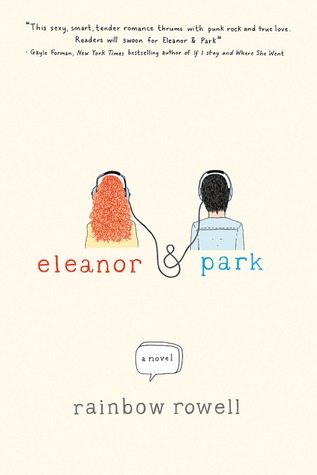
Eleanor and ParkFangirlAttachments


I have recently read the three Rainbow Rowell books currently published and I LOVED them. I am still trying to figure out why.

It all started with Eleanor and Park. It is a YA book that had been getting a lot of buzz lately and being a high school librarian I just had to read it, you know, because it is my job. Yes, I DO have one of the best jobs ever!

I read it over winter break in two days, it would have only taken me one day if I didn't have a husband and kids and the fact that I was at my in-laws and needed to make appearances now and then.  I am still trying to figure out why I liked the book so much. It felt real but it didn't, I connected with the characters but they were not me. I really liked how the characters connected through music but not in a pretentious sort of way. I loved seeing Eleanor and Park's relationship grow.

Next up was Fangirl. I read the book again over two days, staying up until midnight to finish it. This book follows Cath and her twin sister Wren as they navigate thier first year of college. Cath is still wrapped up in a fandom that she loves and writing fanfiction about her beloeved characters. She tries to stay hidden from people and be invisible. Wren on the other hand is living what we see as the typical college life, partying.  Again, why did I like this book so much? Why did I sacrifice some sleep over it? I do not know. I liked the characters and the story was interesting. Even though I find her characters living very different lives than I do they still resonate with me.

Just this week I read Attachments. The premise is kind of strange, this guy named Lincoln is hired by a comany as an IT person and learns later that he has to read flagged email and send warning to people. He is not comfortable with this part of his job but having this job will allow him to move out of his mother's house and hopefully "get a life". One day he started getting flagged email from conversations between Jennifer and Beth and, like us the reader, he becomes intrigued with their conversations and kind of cyber-stalks them and ends up having feelings for one of the women. Somehow, Rowell makes us root for Lincoln and somehow this book has a hopeful ending.

In the end, my quest to find out why I love these books so much is similar to my quest to find out why I like some books over others. Why do I read fiction? What is it I am expecting?

Here are some of my conclusions:

1. Mood is important - There are times when I am just not in the mood for a fantasy book or a teen book or a deep book. Paying attention to what grabs my attention at any given moment significantly affects my opinion of the book. I do not read a lot of realistic fiction (at least not nearly as much as my students do) so when I do finally pick one up I am usually pleasantly surprised. When it comes to fantasy, it just has to be a stellar book because I read more of that genre.

2. I read fiction as an escape. A lot of times I like to imagine myself as one of the characters. Whether they are like me or not, I need to feel a connection with someone in the story.

3. I need a hopeful ending. Not necessarily happy but hopeful.

Not everyone is going to love these books. I can't give them 5 stars because I realize I am a bit biased when it comes to these book. I read them for fun, not to judge and since I had fun reading them then they are awesome books in my humble opinion. She writes deep characters that I can identify with and understand. She writes in a language that I understand. Combine that with an interesting or unique plot and a hopeful ending and you have a book (or books) that I want to keep reading. Rainbow Rowell, you are my new favorite.

4 stars for all three...please don't ask me which one was my favorite!

P.S. Can I just say that I think it is interesting that Eleanor and Park is high school, Fangirl is college, Attachments is about post-college adults (20s) and her new book Landline (July, 2014) is about mid-life. She is currently writing a graphic novel (eek!!!) so I'm guessing it will be middle school? One thing is for sure, I will be reading them all!

Thursday, December 19, 2013

Review: Falling Kingdoms by Morgan Rhodes


Title:  Falling Kingdoms
Series:  Book 1 of Falling Kingdoms


In a land where magic has been forgotten but peace has reigned for centuries, a deadly unrest is simmering. Three kingdoms grapple for power—brutally transforming their subjects' lives in the process. Amidst betrayals, bargains, and battles, four young people find their fates forever intertwined:

Cleo: A princess raised in luxury must embark on a rough and treacherous journey into enemy territory in search of a magic long thought extinct.

Jonas: Enraged at injustice, a rebel lashes out against the forces of oppression that have kept his country impoverished—and finds himself the leader of a people's revolution centuries in the making.

Lucia: A girl adopted at birth into a royal family discovers the truth about her past—and the supernatural le gacy she is destined to wield.

Magnus: Bred for aggression and trained to conquer, a firstborn son begins to realize that the heart can be more lethal than the sword. . . .

The only outcome that's certain is that kingdoms will fall. Who will emerge triumphant when all they know has collapsed?


Review: 
Unless you have not heard of this book at all, it's hard to escape hearing it billed as "Game of Thrones for Young Adults."  I should really know better by now that when a publisher says "Book is the next Famous Book, just like Hugely Famous Book!" they are going to be horrible wrong.  Does that mean that Fallen Kingdoms is bad?  Absolutely not.

While it lacks the epic scope and of Martin's massive saga, Falling Kingdoms doesn't fall completely on its face.  The growing conflicts among the three nations are clearly explained, setting the stage for the main drama.  The characters are distinct from one another - even if their narrative voices are not - and their motivations mostly make sense.

There is enough action throughout the story to keep a reader turning the pages, if not with enthusiasm, at least with curiosity.  The plot progresses steadily and ramps up just as it should to the final conflict.  The book even ends with a not-quite-cliffhanger, setting the stage for the sequel(s).

So far, so good.  Yet I'd have a hart time wholeheartedly recommending this book to anyone.  Again:  this is not a bad book.  It's just a shallow book. 

The characters start out largely what they'll be by the end of the book.  Their development, such as it is, is so loudly foreshadowed that nothing really comes as a surprise.  The small changes in their arcs do not drive any emotional relationship between the characters and the reader, and it's incredibly hard to invest in a book when you aren't bonded to anyone in the pages. 

This shallowness seeps into the world-building as well.  The three countries are defined, their problems are delineated and the stage is set for the main conflict.  And then we never hear anything more about the places.  It doesn't ever really feel like a real place, just a painted backdrop where the characters can act out their little dramas.

Finally, there is the plot.  Here is it:  rival kings find reasons to go to war that affect the lives of four young people.  I understand this is not War and Peace; it's not even trying to be.  But once again, the abrupt and generic nature of the plot doesn't do much to grab a reader's attention and hold it. 

And, hey, it can't be a young adult novel without some sort of romance shoved into the pages somewhere, right?  Alas, the only real romance in this book is hardly the stuff of legend and ends abruptly for the sake of the generic plot.  Hooray.

I know I've done a lot of ragging on this book in this review, but it's NOT BAD.  I just think the genre has more to offer then this.  If you feel like reading it, go ahead.  Just don't expect fireworks.
2.5 out of 5 stars.

Saturday, December 14, 2013

Review: Palace of Spies by Sarah Zettel


Palace of Spies by Sarah Zettel

Blurb:
Sixteen-year-old Peggy is a well-bred orphan who is coerced into posing as a lady in waiting at the palace of King George I. Life is grand, until Peggy starts to suspect that the girl she's impersonating might have been murdered. Unless Peggy can discover the truth, she might be doomed to the same terrible fate. But in a court of shadows and intrigue, anyone could be a spy—perhaps even the handsome young artist with whom Peggy is falling in love...

Review:
After a time of not-really-reading-a-whole-lot, it's nice to get back into the swing of things with a book exactly like this one.  Palace of Spies is not going to be the next Twilight or the next Hunger Games, and there's nothing wrong with that.  Instead, it's a historical fiction-plus-mystery with a dash of romance tossed in for good measure.  
After losing just about everything, Peggy finds herself in the company of people who ask her to take the place of a recently deceased courtier and spy for them.  Of course this plot requires a certain willing suspension of disbelief:  no one except perhaps identical twins looks that alike, and even with weeks of training and drills it would be hard to take on both the attitude and behaviors of someone you have never met.  However, once you have beaten your disbelief into dust, you are left with a delightful story that skips along cheerfully and doesn't fail to satisfy.  
The initial court scenes introduce a panoply of characters that each carry some mystery.  As she tries to figure out details for her benefactors, she starts to uncover evidence that perhaps her lookalike was murdered - and was perhaps part of a plot far more sinister than simply an illicit love affair.  There aer plenty of historical facts worked into the narrative to please those who are craving a little HF and there is enough goo-goo eyed scenes to sate the romance craving as well.  Mystery!  Politics!  History!  Romance! What else could you want?  However, this is the first book in a projected series, so don't expect everything to be wrapped up neatly with a bow at the end.
I don't have much else to say about this book.  It's fun, it has its high points, and it's a quick read. Recommended!
4 out of 5 stars!

Monday, December 9, 2013

One Mini-Review & Three DNFs: Stormdancer, Under the Mound, Hild, His Last Duchess

Somehow I have gotten behind with a couple reviews and realized that I have a small stack of books needing some comment.  Let's play catch up!  Whee!

Mini-ReviewStormdancer by Jay Kristoff.
Not sure why I didn't write a full-length review of this book.  Great heroine, exciting world, interesting characters, adventure, intrigue - and a griffin!  What's not to like?  It seems like the greater blogosphere is reading this; it won't be hard to find decent reviews if you want a more robust one.  4+ out of 5 stars.


Now for the DNFs.
Under the Mound by Cynthia Heinrichs
 A book about mysterious goings-on at a famous cairn mound in Scotland - this should be great!  For whatever reason, I couldn't find the hook in this story.  Perhaps it was just a case of "right book at the wrong time" but I didn't make it more than 50 pages in before I lost interest.  I'm still intrigued enough by it to consider reading it another time, but I'm not sure it'll be high priority.


Hild by Nicola Griffith
After seeing a review on NPR.org I had to read this story about a 7th(?) century saint.  Alas, this book is written in a style that I have a hard time reading, breaking my emotional attachment to any character with startling regularity.  Both sentences and paragraphs are long-winded, sometimes requiring multiple readings of the same chunk of text over and over to "get it."  AND there's a glossary - which you will almost certainly need to use to understand parts of the text.  Other people seem to have loved this book, but it didn't work for me.


His Last Duchess by Gabrielle Kimm
I think I wasn't in the mood for this when I started to read it.  What starts out as a story about political alliances in renaissance Italy quickly devolves into "drama" about a husband's inability to consummate his marriage.  I picked up historical fiction and got a melodramatic romance novel instead. Maybe another time.  Maybe not.

Monday, November 25, 2013

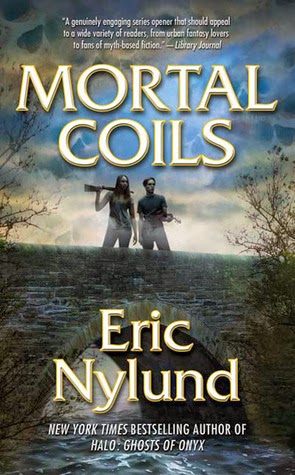
Book Review: Mortal Coils


Mortal Coils by Eric Nylund
Series:  Mortal Coils (Book One)

Blurb:
Nothing interesting ever happened to fifteen-year-old orphans Eliot and Fiona while they’ve lived in the strict, oppressive household of their grandmother. A chance visit, however, reveals that there is much more to the twins. They are the offspring of a goddess and Lucifer, Prince of Darkness.

Now, to settle the epic custody battle between these two families, the fallen angels create three diabolical temptations, and the gods fashion three heroic trials to test Eliot and Fiona. More than ever they need to stick together to survive and to learn how to use their budding supernatural abilities . . . for family allegiances are ever-shifting in the ancient, secret world they have entered.


Review:
Because it's November, this book gets the unfortunate disadvantage of having been read during NaNoWriMo, meaning it was read in little chunks during my limited free time instead of being read over the course of a couple days.  This doesn't help any book, no matter how well written (or not), so take this review with a grain of salt.

As the blurb says, the book starts out with twins Eliot and Fiona, trapped in a highly regimented and rule-bound household, wanting something exciting to happen to them.  Of course all is not well, and even when they think they're just boring teenagers, the reader can tell that there's something special about them, even as they go through their daily grind of homework and thankless job.

Both twins get their chance to be the point of view character, and each handles the challenges around them slightly differently.  They are similar in many ways and eager to prove themselves but have their own dreams and insecurities.  While their voices can get muddled, having both perspectives strengthens the story. 

The overall concept was what turned me on to the book.  So much urban fantasy has become "tough PI (or the like) involved with vampires/werewolves/etc in a modern city," and while there's nothing particularly wrong about that, it gets tiring.  The author chose to try something else and pit mythological gods and goddesses against the demons of Christian mythology.  It's a clever idea.  

The overarching "challenges to prove yourself" idea is one that appears in classic stories, and though it won't set the world on fire, is a great story structure to use.  It wasn't hard to guess how it was going to turn out, but the "how are we getting there" is the fun part of this journey.

The first major problem the book has is its length.  My mass market is 672 pages long.  For a book that is sort of advertised for (and written about) teenagers, that seems like an awfully long story.  I wouldn't be complaining about the length if the story grabbed you from the first few pages and didn't let go, but it felt like a long time until the hook and an even longer time until the really plot line gets moving.  More than once I considered just speed-reading to the end and putting it aside.  Not a good sign.

The second complaint is the Immortal/Infernal characters and their names.  Clearly the author has drawn on Greek mythology rather heavily, borrowed some from Norse and Mesopotamian, and done the rest from the Judeo-Christian tradition.  I have absolutely no problem with this, but I had a hard time trying to figure out who was who.  

Most of the gods/demons are given modern human-sounding names.  Again, this isn't a problem if you can identify them and figure out who they are supposed to be.  But when you have a room full of Louis, Aaron, Dallas, Audrey, Henry and Uri, I have absolutely no idea why I should be concerned about these people.  It's really hard to be concerned when you don't have the background on these figure.  Toward the end it becomes clearer, but by that point I was beyond caring about who these characters, who have been conniving and plotting for 500 pages, are meant to represent.  

All in all, I can't say I was disappointed in this book, but I'm not sure that it was worth the time investment.  

Rating:  3 out of 5 stars.
Will I read the sequel?  Probably not.